WhatsApp +880 1913-394033  ·  pathfriendbd@gmail.com Grand Plaza, 2nd floor, Wireless, Moghbazar, Dhaka-1217
  1. Home
  2. Tours
  3. Archaeological Trip to Bangladesh
Holiday Packages

Archaeological Trip to Bangladesh

  • Duration13 Days
  • RunsRound the year
  • Next tourNovember
13Days

Overview

Thirteen days among the ancient monasteries, mosques, temples and palaces of Bangladesh, ending with three days in the Sundarbans.

Bangladesh has a remarkable archaeological heritage, much of it from the early periods before and during Muslim rule. A great deal has yet to be excavated or studied, but visitors who see what has been uncovered come away full of admiration, and there are several places where the remains can still be seen today. The most important are the great Buddhist monastery at Paharpur, the mosque city of Gaur and the temples of Puthia in Rajshahi, Kantajew Temple in Dinajpur, Mahasthangarh in Bogra, the Sixty Dome Mosque in Bagerhat, Mainamati in Comilla, Sonargaon, and the Mughal monuments of Dhaka. In all of them the past still feels close.

This tour takes you to the historic sites of Bangladesh at an unhurried pace. To finish, you spend three days deep inside the Sundarbans, the largest mangrove forest in the world, which will make the trip one to remember.

When to go

  • Jan: good time to go
  • Feb: not the ideal time
  • Mar: good time to go
  • Apr: not the ideal time
  • May: not the ideal time
  • Jun: not the ideal time
  • Jul: not the ideal time
  • Aug: not the ideal time
  • Sep: not the ideal time
  • Oct: good time to go
  • Nov: good time to go
  • Dec: not the ideal time
  • Good time to go
  • Not ideal
  • Tour doesn't run

Highlights

  • Visit all 3 UNESCO world heritage sites and all archaeological sites in Bangladesh.
  • Enjoy an overnight ship journey and experience riverain Bangladesh.
  • Visit UNESCO world heritage Sixty Dome Mosque in Bagerhat including 2 other places.
  • Visit the famous Kantajee Temple in Dinajpur, Rangpur.
  • Visit UNESCO world heritage Sompura Mohavihara (Paharpur Buddhist Bihar) and Mahasthangarh in Bogra.
  • Visit temple city Puthia, Mosque city Chapai Nawabgonj (Gaur), and all the historic-archaeological places in Rajshahi, Rangpur, Bogra & Sirajganj districts.
  • Visit the largest mangrove forest in the world & UNESCO world heritage Sundarbans with an3 days of exploration.
  • Visit all the historical and popular places in New and Old Dhaka. Experience the colour of the city.
  • Visit the old capital Sonargaon, Museum, Panam city, and archeological Mainamati. A place covered by World War 2 cemetery, Shalban Vihara, Lamai Hill range, and other Buddhist ruins.
  • Visit Pottery & Brass villages and Baliati Zamindar palace in Manikganj.

Places you will see

  • Dhaka & Around

    • ⊕ New & Old Dhaka ⊕ Old capital Sonargaon & Panam Nagar ⊕ Mainamati Comilla ⊕ Baliati Palace Manikganj & Pottery-Brass village ⊕ Overnight Ship Journey.
  • North Bengal-Rajshahi, Rangpur & Bogra

    • ⊕ Paharpur Buddhist Bihar ⊕ Mahasthangarh ⊕ Kantajee Temple ⊕ Puthia temple city ⊕ Natore Rajbari ⊕ Choto Sona Mosque ⊕ Tahkhana Complex ⊕ Darasbari Mosque ⊕ Khania Dighi Mosque ⊕ Kusumba Mosque ⊕ Tajhat Palace ⊕ Rangpur sugar mill ⊕ Navaratna Temple Hatikumrul
  • Bagerhat

    • ⊕ Sixty Dome Mosque ⊕ Shrine of Khan Jahan Ali ⊕ Nine Dome Mosque ⊕ Singair Mosque ⊕ Kodla Math
  • Sundarbans

    • ⊕ Kochikhlai wildlife sanctuary ⊕ Kotka wildlife sanctuary ⊕ Harberia Eco-tourism centre ⊕ Jamtola Sea-beach ⊕ Karmajal Crocodile Breeding Centre ⊕ Fishing village & firms.

Route

  1. 1DhakaNights 1–2
  2. 2BograNight 3
  3. 3RangpurNight 4
  4. 4RajshahiNights 5–6
  5. 5KhulnaNight 7
  6. 6SundarbansNights 8–9, on the boat
  7. 7BarisalNight 10, overnight ship to Dhaka
  8. 1DhakaNights 11–12

Itinerary

  1. Day1

    Arrival in Dhaka

    • Our guide meets you on arrival at Dhaka Airport and takes you to your hotel for the night. Spend the rest of the day relaxing or, if you prefer, get your first taste of Dhaka on a rickshaw ride.
  2. Day2

    Dhaka city tour

    • Your guide collects you by car from your hotel or home between 8:00 am and 8:30 am. We begin at Kawran Bazar vegetable market, the largest bazaar in Dhaka, then see the National Assembly (Parliament Building) from the outside. Designed by the renowned American architect Louis Kahn, it is one of the largest legislative complexes in the world.
    • Visit Curzon Hall and Dhakeswari Temple, Bangladesh's national Hindu temple, which Ballal Sen founded in the 12th century.
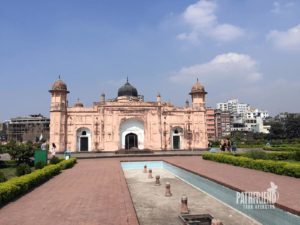
    • Go on to Lalbagh Fort, the city's best-known sight, which Subahdar Muhammad Azam Shah began in the 17th century, during the Mughal period, and which was never completed. See the Star Mosque and the Armenian Church at Armanitola, then stop for lunch.
    • In the afternoon, visit Ahsan Manzil, the Pink Palace, at Sadarghat, which was the official residence of the Nawab of Dhaka in the 19th century. From there it is a five-minute walk along a busy street (or a short drive) to Sadarghat River Port, where crowds of passengers and trading boats fill the famous Buriganga River.
    • Overnight in Dhaka.
  3. Day3

    Tangail, Navaratna Temple and the ancient city of Mahasthangarh

    • We leave for Bogra in the morning, stopping in Tangail to see Pakutia Zamindar Palace.
    • After the impressive crossing of the Jamuna Bridge we visit the beautiful Navaratna Temple in Sirajganj, among the finest temples of this style in the country.
    • After lunch we visit Mahasthangarh, the oldest city yet discovered in Bangladesh, which goes back to the 3rd century BC or earlier. What remains is mostly foundations and mounds that hint at how grand it once was. The site museum displays an interesting selection of the finds, and Behula's Bashor Ghor is one of the main things to see.
    • We spend the evening at the Buddhist ruins of Vasu Vihara, where the sunset over the countryside is a lovely way to end the day.
    • Overnight in Bogra.
  4. Day4

    Kantajew Temple and Noyabad Mosque in Dinajpur

    • Today we drive for four hours to Dinajpur. On arrival we see the Dinajpur Rajbari, the 18th-century house of a Hindu zamindar family and among the most eye-catching historic buildings of north Bengal.
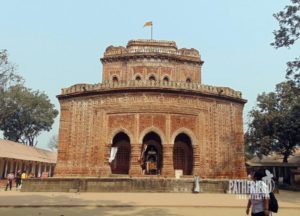
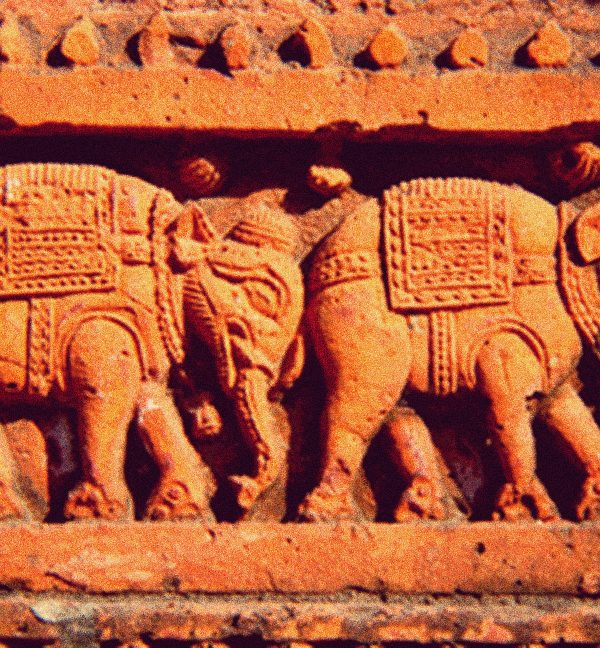
    • We go on to Kantanagar for the famous Kantajew Temple, the most spectacular Hindu temple in Bangladesh and one of the country's loveliest monuments. Its walls are covered with countless finely carved terracotta panels, each telling part of a story.
    • We visit Noyabad Mosque, a short distance from the temple.
    • In the evening we drive to Rangpur for the night.
  5. Day5

    Tajhat Palace, Somapura Mahavihara at Paharpur and Kusumba Mosque

    • We visit Tajhat Palace in Rangpur and then drive to Paharpur. The fields of vegetables and fruit along the road are well worth a stop, and the betel leaf gardens make particularly good photographs.
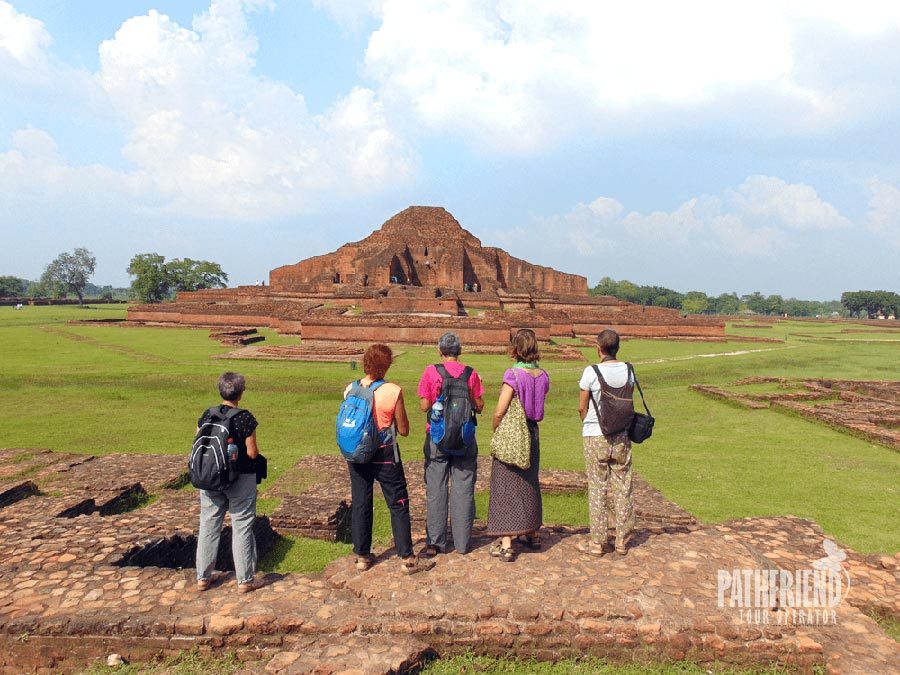
    • After a three-hour drive we reach the Paharpur Buddhist Vihara, founded in the 8th century AD. Also called Somapura Mahavihara, it has UNESCO World Heritage status, and no archaeological site in Bangladesh is more impressive. In its day it was the largest Buddhist monastery south of the Himalayas.
    • After lunch we drive on to the well-known Kusumba Mosque, which dates from the period of Afghan rule in Bengal.
    • Overnight in Rajshahi.
  6. Day6

    The lost city of Gaur in Chapai Nawabganj, and the Varendra Research Museum in Rajshahi

    • After breakfast we drive to Chapai Nawabganj to see its historic mosques. The road runs through mango orchards all the way. This is the home of the Khirsapat mango, which was registered as a Geographical Indication product in 2019.
    • We begin by exploring the story of Gaur, the lost city. See Choto Sona Masjid, an exceptionally fine piece of Sultanate period architecture, and the Tahkhana Complex, whose Persian name means a cool building or palace. It stands on the western bank of a large tank in the Firozpur quarter of the old city of Gaur-Lakhnauti.
    • Next comes Darasbari Mosque, now a ruin, which was the largest mosque in the part of Gaur-Lakhnauti that lies in Bangladesh. It takes its name from the darasbari, or place of learning, in which it stood.
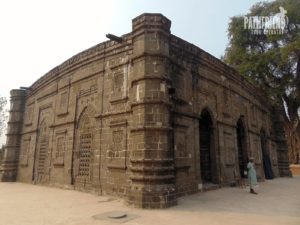
    • We visit Khania Dighi Mosque, one of the treasures of Bangladesh, built in the 15th century. This mosque is also known by other names, including Chamchika Masjid and Rajbibi Masjid.
    • We then return to Rajshahi for the Varendra Research Museum, the country's first museum and one of its richest, with an outstanding collection of sculpture and historical objects. We end the day watching the sunset from the bank of the Padma, as the Ganges is known here.
    • Overnight at the hotel in Rajshahi.
  7. Day7

    Natore Rajbari, the temple town of Puthia, and the train to Khulna

    • Today we visit Natore Rajbari, the older and larger of the two great Rajbari palaces in the area.
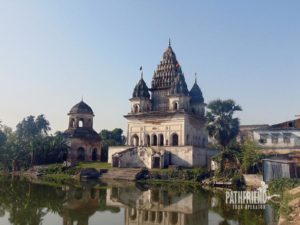
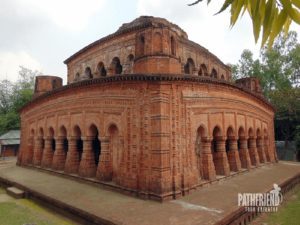
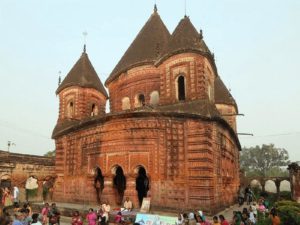
    • We go on to the temple town of Puthia, known for having more historically important Hindu buildings than anywhere else in Bangladesh. Its Shiva Temple is the largest of its kind in the region, and the Govinda Temple, covered in detailed terracotta work, stands in one of the finest old Rajbari courtyards in the country.
    • After an early lunch we are at Rajshahi railway station by 2:00 pm for the train to Khulna.
    • The train arrives at about 8:30 pm. Dinner and overnight in Khulna.
  8. Day8

    Into the Sundarbans

    • We drive to Mongla early in the morning to join our Sundarbans cruise. Settle into your cabin and have breakfast on board.
    • A couple of hours after we set off, the boat calls at the Chadpai forest office. Here we deal with the paperwork and take on an armed forest guard, who stays with us for safety throughout our time in the Sundarbans.
    • We cruise on to the Harbaria eco-centre, one of the best-known stops in the Sundarbans, for a 30-minute walk through the sanctuary.
    • Back on the boat, we continue deep into the forest. Take in the stillness of the world's largest mangrove forest. By evening we anchor close to the Kochikhali forest office and, if there is time, take a small boat along the canals.
    • Overnight at Kochikhali.
  9. Day9

    Kochikhali and Kotka wildlife sanctuaries, the beach and a forest walk

    • This is the big day of the trip. We start at first light, the best time of all for a boat trip along the narrow creeks. Part of the way through we go ashore and walk a good distance to the forest office area.
    • We then cruise to Kotka station, which takes two hours. Look out along the way for deer, crocodiles, birds, otters and Bengal monitor lizards.
    • An hour's walk through thick forest, an adventure in itself, brings us to Jamtola sea beach on the Bay of Bengal.
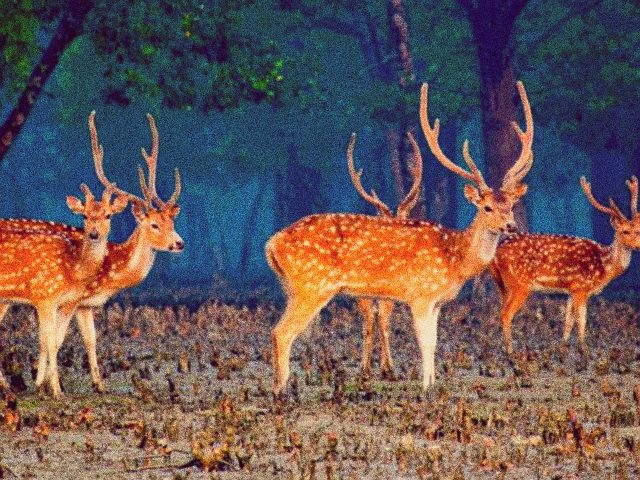
    • After lunch we visit the Kotka wildlife sanctuary, the best place to see herds of deer. We allow plenty of time to explore and to watch the sun go down from the beach.
    • We then begin the journey back and anchor in the middle of the Sundarbans, at Chadpai or Jaimoni. A barbecue dinner on board rounds off the day.
  10. Day10

    Fishing village, the historic mosque city of Bagerhat and the overnight ship from Barisal

    • Another early start, with a short boat trip along the small creeks.
    • Today we call at a fishing village, which also has many shrimp farms. Meet the villagers, find out how they live and spend some happy time with the children.
    • After lunch, get ready to leave the boat. We then drive to Bagerhat.
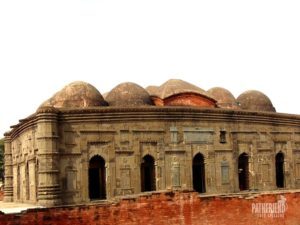
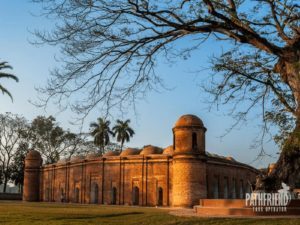
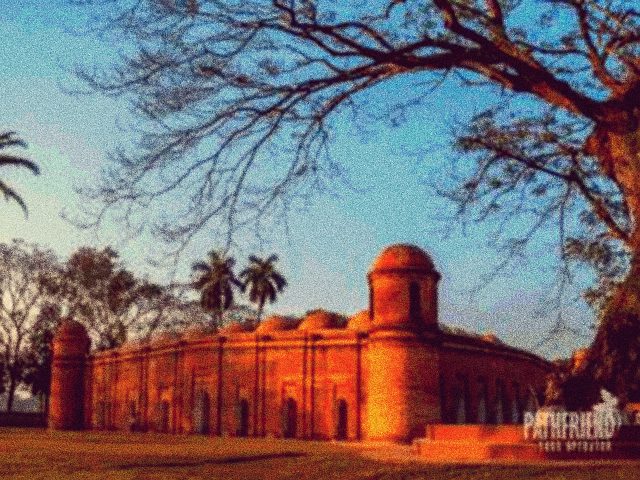
    • See the historic Sixty Dome Mosque, one of Bangladesh's UNESCO World Heritage Sites, and the Shrine of Khan Jahan Ali, the man responsible for over a dozen mosques in Bagerhat, the Sixty Dome Mosque among them. We also plan to see the Nine Dome Mosque, Singair Mosque and Kodla Math.
    • We drive to Barisal to board the 8:30 pm ship and sail overnight to Dhaka.
  11. Day11

    Baliati Palace in Manikganj and a pottery village

    • We dock at the Sadarghat terminal in Dhaka in the morning and drive straight to Manikganj.
    • A couple of hours later we reach Baliati Zamindar Palace, one of the best examples in Bangladesh of 19th-century colonial architecture in the Renaissance style. It has more than 200 rooms, in all shapes and sizes.
    • We then visit a brass workshop and a pottery village in Dhamrai.
    • The National Memorial (Martyrs' Monument) at Savar is also well worth seeing.
    • Overnight at the hotel in Dhaka.
  12. Day12

    The old capital of Sonargaon and the monuments of Mainamati and Lalmai

    • An hour's drive brings us to Sonargaon and the abandoned city of Panam Nagar. We visit the Folklore Museum, which preserves traditional arts and crafts, and Sardar Bari.
    • Next we visit the Second World War War Cemetery at Mainamati, the burial place of soldiers who died on the Burma front.
    • We see the excavated monastery of Salban Vihara and its museum. Kotila Mura, Ananda Vihara, Charpatra Mura and Itakhola Mura, in the Lalmai hills, are Buddhist remains from the 8th and 9th centuries.
    • In the afternoon we drive back to Dhaka.
    • This is the end of our archaeological journey. Check in at the hotel for the night.
  13. Day13

    Departure

    • Your trip to Bangladesh ends today. We take you to Dhaka Airport, and you fly home with a head full of history and some wonderful memories.

Prices

Group sizeRegularPrice per person
1 traveller–$300

Single supplement: $150

Prices are per person sharing a room. If you are travelling with others and would like a room to yourself, a single supplement of $150 per person applies.

Prices are in US dollars. See how to pay and our booking, cancellation & child policy.

What's included

Included

  • All accommodations in hotels or resorts on a twin-share basis. (Upgrades of hotel and single supplement available)
  • All transportation like the air-conditioned car, land cruiser, and Tuk-tuk are mentioned in the itinerary.
  • All meals at the local & tribal restaurant with quality food and mineral water for drinking.
  • Train ticket & air tickets.
  • 24X7 Tea or coffee for the Sundarbans trip.
  • All permissions (police escorts if necessary), entry fees, and tax for the entire trip.
  • English-speaking guide for the entire trip.
  • Airport pickup and drops.
  • 10,500 TK forest revenue & Forest Guard for the Sundarban trip.

Not included

  • Personal expenses.
  • Food not mentioned above.
  • Tips
  • Insurance

Good to know

  • Timing and assembling for the places are flexible; we could change them because of traffic or timing during the tour. But we will cover all the places mentioned in the itinerary.
  • Bengali local food is spicy. Plain rice, vegetables, fish & meat are available in restaurants. Biriyani & Khichuri made of Rice, lentils, meat, and special spices are the famous food of old Dhaka also available in other cities. (Non-spicy food is possible to order at most of the restaurants if you like.)
  • It requires modest clothes to visit any mosque. It does not allow shorts for the purpose, and especially, women have to cover their hair and arms with clothes.
  • The dress of shorts is not a problem in the Sundarbans area.
  • Ahsan Manzil is closed on Thursday and opens Fridays after 3:00 pm. Lalbagh Fort is closed on Sundays and open on Mondays after 2:00 pm. Ahsan Manzil and Lalbagh Fort are also closed on government holidays. But you can have an outside view of these places.
  • Old Rocket Steamer is out of service but modern rocket ships are available on the same route.
  • Sundarbans: The itinerary could be changed because of tides, daylight hours, moon phase, and weather. But we always try to cover all the mentioned places.
  • Sundarbans: Rocket Steamer is not available on Friday.
  • Sundarbans: The small boats are best for the Sundarban cruise. We organise a private basis tour with the accommodation of 4-10 people by these boats. The room size is quite smaller, no running hot water, electricity is supplied by the battery, and a small generator to charge up the electrical devices. But it’s comfortable to spend days with the facilities.
  • Sundarbans: We make the food on the boat by the experienced chef during the trip.
  • Sundarbans: The quantity of mosquitoes is more sometimes. You must carry the mosquito repellent for the trip.
  • Sundarbans: No phone signal works inside the deeper forest, but at some point, you will get a phone signal to call an emergency. If you use Bangladeshi TeleTalk SIM, we’ll get better coverage in a remote area like Kotka.
  • Sundarbans: The chance of seeing tigers is very rare in the Sundarbans. The lucky one gets the chance of it.
  • Sundarbans: Make yourself silent for the boat trip or walking into the forest. The best way to explore Sundarban is to keep silent and look.

Photos

Questions

What is the best time to visit Bangladesh?

That depends on what you enjoy and what kind of trip you have in mind. The climate here is tropical monsoon, so there is a clear wet season and a clear dry season. Most people find October to March the best months to come. It is cool and dry then, which makes travelling and being outdoors comfortable, and it is a very good time for cultural and historic sites as well as the natural ones.

Per person$300Book now
Keep exploring

You might also like

All tours
  • Holiday Packages 20Days

    Best of Bangladesh

    Twenty days across the whole country, taking in every well-known region and all of Bangladesh's UNESCO World Heritage Sites.

    Per person$500

  • 37% off
    Holiday Packages 3Days

    Sundarbans Tour Bangladesh

    Three days by private boat through the Sundarbans, the great mangrove forest of the Bay of Bengal and home of the Royal Bengal tiger.
    Per person$300 $190
  • Holiday Packages 28Days

    Bangladesh Tour

    Our longest journey: the whole of Bangladesh, from the Sundarbans and the ancient north to the tea hills, Cox's Bazar and Saint Martin's.

    Per person$500